
5 Fresh Ideas for Spring Test Review Season
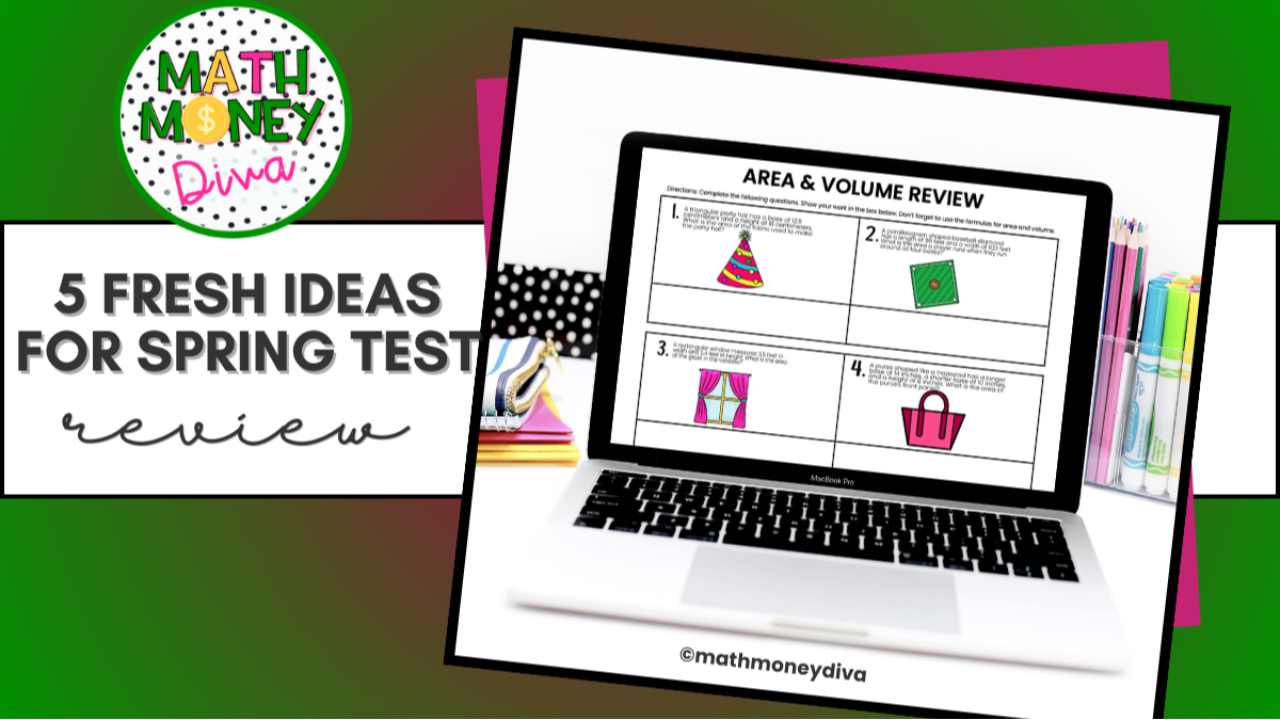
5 Fresh Ideas for Spring Test Review Season That Lighten Your Workload
Smart Middle School Math Test Prep Using Engaging Digital Resources
Spring Test Review Doesn’t Have to Mean Spring Burnout
Middle school teachers, we see you.
Spring test season hits right when your energy dips. Your to-do list is growing, your students are restless, and the pressure of end-of-year math test prep feels heavier every week.
Take a breath.
I’ve taught middle school math for 10 years, and I’ll tell you this: spring review doesn’t fall apart because teachers don’t care.
It falls apart because we try to carry too much.
We over-print.
We over-explain.
We over-plan.
By April, we’re running on fumes.
You don’t need more worksheets.
You need smarter systems and engaging digital test review strategies that actually support learning.
Here are 5 practical ways to make spring test review effective — without doubling your workload.
🌟 1. Mix It Up with Digital Stations
Why it works:
Digital math stations allow you to differentiate middle school math test prep without reteaching everything whole-group. Students rotate through self-paced activities while you pull small groups or monitor progress.
I started using digital stations because I was tired of reteaching entire lessons when only 5–6 students actually needed it.
Try this:
Set up four digital stations focused on key 6th grade math skills:
-
Fractions & Decimal Operations
-
Percent Proportions
-
One-Step Equations
-
Area, Volume, or Coordinate Plane
Include:
-
A self-checking quiz
-
An interactive drag-and-drop task
-
A partner challenge
-
A short skill refresher video
Teacher tip: Use visible timers and clear expectations for movement. Structure is what makes stations successful — not just the activity itself.
2. Host Review Game Days That Run Themselves
Why it works:
Interactive review games increase engagement during spring test prep when attention spans are low. Structured digital games manage classroom energy instead of draining yours.
Try this:
Use digital quiz platforms like Blooket or Quizizz for quick whole-class review. Or rotate in structured board games and digital challenges that reinforce essential 6th grade math skills.
When review becomes interactive instead of repetitive, participation increases — and so does retention.
3. Use a “Must-Do, May-Do” Review Choice Board
Why it works:
Choice boards reduce micromanagement and increase student ownership during middle school math test prep.
Instead of assigning the same task to everyone, structure it like this:
-
3 “Must-Do” core review activities
-
1–2 “May-Do” enrichment or extension tasks
Students stay productive, and you stop answering, “What do we do now?”
My digital test review choice boards are built exactly for this — assign in Google Classroom and let the structure do the work.
4. Build Peer Teaching into Your Review
Why it works:
Explaining a concept strengthens understanding more than silent practice ever will.
Middle schoolers often learn better from each other — especially during high-pressure test review season.
Try this:
Assign small groups one skill to master:
-
Integer operations
-
Percent word problems
-
Evaluating expressions
-
Graphing on the coordinate plane
Have them present strategies using a whiteboard or digital slide.
Add peer shout-outs at the end to reinforce effort and accuracy. Structured math talk builds confidence before testing.
5. Spiral Daily Warm-Ups for Stress-Free Retention
Why it works:
Short, daily spiral review prevents the need for massive reteaching sessions.
Instead of saving everything for one large packet, use:
-
3 targeted review questions daily
-
Mixed skill practice
-
Self-checking slides or quick answer discussions
Spiraled warm-ups are one of the most effective ways to reinforce essential middle school math standards before end-of-year assessments.
Seasoned Teacher Truth: More Work ≠ Better Review
If your spring test review plan looks like:
-
Packet after packet
-
“Complete this quietly”
-
Grading stacks every weekend
That’s not strategy. That’s survival mode.
Middle school math test prep requires:
-
Structure
-
Interaction
-
Immediate feedback
-
Clear expectations
And teachers need digital test review resources that don’t increase planning or grading time.
If a review tool creates more work for you than effort for students, it’s not sustainable.
✅ You Don’t Have to Do It All to Do It Well
Spring test review doesn’t have to drain you.
With structured systems, engaging digital activities, and intentional spiraling, you can prepare students for success without burning yourself out.
I created my End-of-Year Math Test Prep Bundle because I was tired of scrambling every April.
It includes 12 engaging, self-checking digital math activities covering:
-
Ratios & Unit Rates
-
Percent Proportions
-
Fraction & Decimal Operations
-
One-Step Equations
-
Evaluating Expressions
-
Area & Volume
-
Coordinate Plane
-
Integer Operations & Word Problems
These digital test review resources are designed for:
-
Whole-class review
-
Small group instruction
-
Math stations
-
Independent practice
-
Homework
-
Early finishers
They reinforce key skills, provide immediate feedback, and reduce grading time — so you can focus on instruction instead of paperwork.
If you’re looking for middle school math test prep that supports your students and protects your energy, you can explore the Spring Test Review Bundle in my Teachers Pay Teachers store.
You don’t need more stress this season.
You need structure, clarity, and tools that work as hard as you do.
You’ve got this, teacher friend. 💛
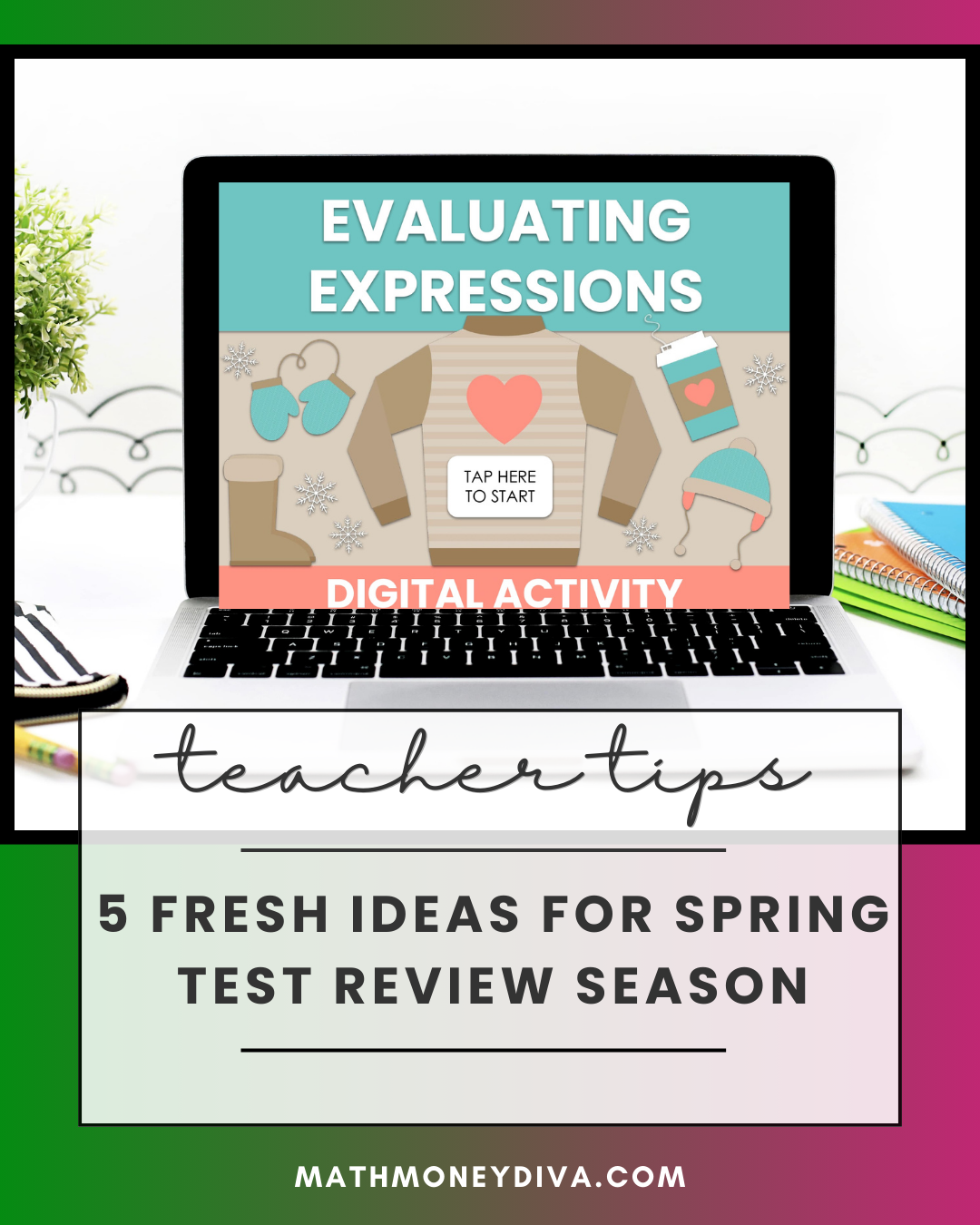
Don't miss a beat!
For more education tips and valuable information on classroom economy and math teaching resources, join our community!
We hate SPAM. We will never sell your information, for any reason.
Hey Teacher Friend!

