5 Creative Ways to Use Agenda Slides in Your Middle School Math Classroom
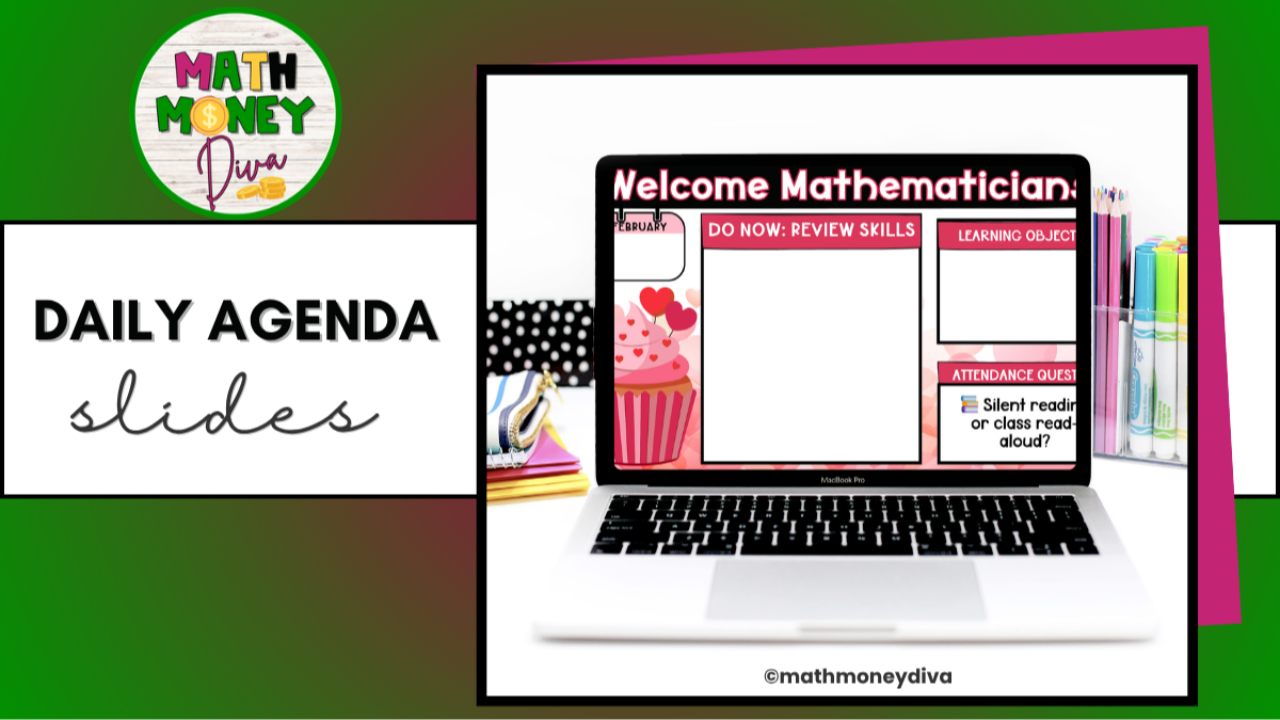
If your class starts with students wandering in, asking "what are we doing today," and taking forever to settle down, agenda slides might be the simplest fix you're not using yet.
I know, I know. It sounds basic. But the way you use agenda slides can completely change the energy and focus of your classroom — and when they're done right, they do a lot more than just list the day's activities.
Here are five ways I use agenda slides in my middle school math classroom to build structure, boost engagement, and take back those first five minutes of class.
1. Kickstart Your Lesson and Kill the Chaos
The moment students walk in, they should know exactly what's happening. No asking. No confusion. No three kids standing at your desk while you're trying to take attendance.
A clear agenda slide that outlines the day's objectives, activities, and any important announcements does all of that for you. It prepares students mentally before the lesson even starts and signals that class has begun even before you say a word.
This is one of the simplest classroom routines you can build, and it pays off every single day.
2. Reinforce Key Concepts With Visual Reminders
Your agenda slide doesn't have to be just text. Adding images, charts, diagrams, or visual previews of the day's math concept makes the slide work harder for you.
Visual reminders on your agenda slide:
- Support students who need to see concepts before they hear them
- Prime the brain for what's coming
- Give struggling students an extra touchpoint before instruction begins
If you're teaching fractions, ratios, or any concept that clicks better with a visual, put a preview right on the slide. It takes two extra minutes to set up and makes a real difference for your visual learners.
3. Build Student Accountability and Ownership
Here's where agenda slides go from a routine tool to a culture-building one.
When you add sections where students can track their progress, set goals, or reflect on their learning, you shift the dynamic. Students stop being passengers and start being participants.
Try adding simple prompts directly to your slide, like:
-
"Today's Goal:"
-
"I will know I understand this when I can..."
-
"Before we start — rate your confidence: 1, 2, or 3"
-
Attendance Questions
These small additions take 30 seconds for students to complete and build the kind of ownership that makes your classroom economy work even better. When students are already used to tracking their progress and setting goals, connecting that habit to earning and managing classroom cash feels completely natural. Here's how to set up a classroom economy system that supports that kind of ownership.
4. Encourage Reflection and Real Feedback
Most teachers struggle to gauge student understanding in the moment — and by the time you figure out half the class is lost, you're already two lessons ahead.
Agenda slides fix that.
Wrapping up class with a quick reflection built right into the slide gives you real-time feedback without adding a separate activity. Try prompts like:
- "What clicked for you today?"
- "What questions do you still have?"
- "Give today's lesson a thumbs up, sideways, or down."
This builds a culture of continuous improvement and honest communication — and it gives you the data you need to plan tomorrow's lesson without guessing.
5. Use Agenda Slides to Support Classroom Jobs
This one is a game-changer if you're running a classroom economy.
Assign a student the job of updating and displaying the agenda slide each day. This gives the student real responsibility, keeps your job chart active, and takes one more task off your plate.
When classroom jobs are tied to visible, daily routines like the agenda slide, students take their roles more seriously. It stops feeling like a made-up task and starts feeling like something that actually matters to how the class runs.
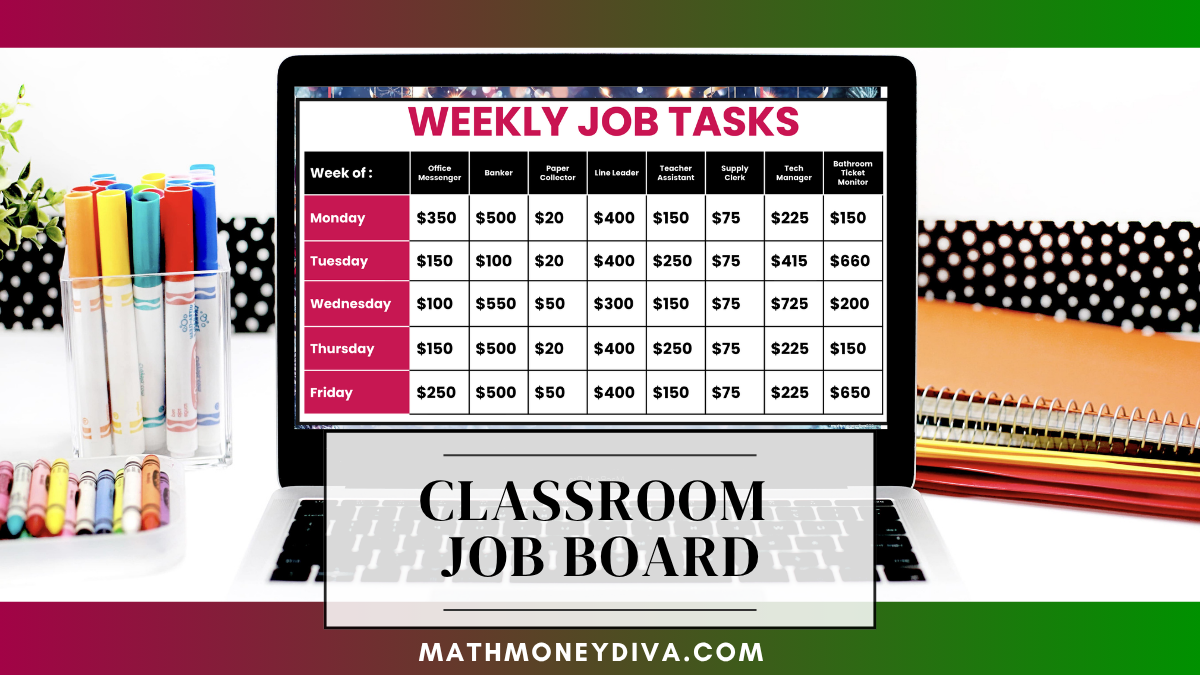
If you're still figuring out which jobs work best in a middle school classroom, here are classroom job ideas that pair perfectly with this kind of routine.
Ready-to-Use Agenda Slides for Middle School Math
If you'd rather skip the setup and start using agenda slides tomorrow, I've got you covered. My agenda slides for middle school math are ready to use, fully editable, and designed to work with everything we talked about in this post — grab them on TPT and have them running in your classroom this week.
Final Thought
Agenda slides aren't just an organizational tool — they're a culture tool.
When used intentionally, they set the tone, build responsibility, support your classroom economy, and give students the structure they need to actually focus and learn.
Start with one tip from this list. Build from there. And watch how much smoother your classroom runs when students walk in knowing exactly what to expect.

Don't miss a beat!
For more education tips and valuable information on classroom economy and math teaching resources, join our community!
We hate SPAM. We will never sell your information, for any reason.
Hey Teacher Friend!

